Phosphate limestone, soil improver and nutrient source for Macroptilium Atropurpureum cv. Siratro
Article Sidebar
Main Article Content
Abstract
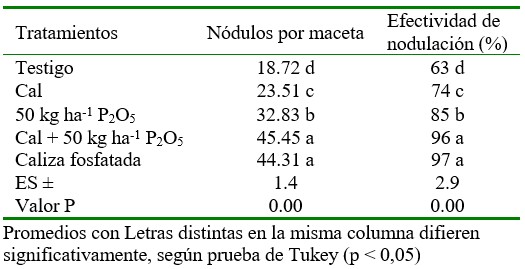
The search for fertilization alternatives for forage crops based on the use of domestically produced nutrient sources is imperative to reduce the costs of animal feed production and to reduce the use of external inputs. Based on this premise, an experiment was conducted under semi-controlled conditions to determine the effect of phosphate limestone, a mineral of national origin, on soil fertility, nutritional status and yields of Macroptilium atropurpureum cv. Siratro, grown in a low fertility soil. Five treatments (1 t ha-1 lime, 50 kg ha-1 P2O5, 1 t ha-1 lime+ 50 kg ha-1 of P2O5, 1 t ha-1 phosphate lime and a control without lime and phosphorus) were evaluated in a completely randomized design. Indicators of soil fertility, biomass macronutrient concentrations, nodulation effectiveness and crop yields were evaluated. Phosphate limestone reduced soil acidity and increased its assimilable P content. Its application increased biomass N, P and Ca concentrations, the number and effectiveness of root nodules, and plant aerial and root biomass yields, with results similar to those obtained with lime and phosphoric fertilizer. It is concluded that the use of phosphate limestone constitutes an agronomically effective alternative to improve soil fertility, reduce the use of synthetic phosphoric fertilizer and increase the productivity of Macroptilium atropurpureum cv. Siratro.
Article Details

This work is licensed under a Creative Commons Attribution-NonCommercial 4.0 International License.
Those authors who have publications with this journal accept the following terms of the License Attribution-NonCommercial 4.0 International (CC BY-NC 4.0):
You are free to:
- Share — copy and redistribute the material in any medium or format
- Adapt — remix, transform, and build upon the material
The licensor cannot revoke these freedoms as long as you follow the license terms.
Under the following terms:
- Attribution — You must give appropriate credit, provide a link to the license, and indicate if changes were made. You may do so in any reasonable manner, but not in any way that suggests the licensor endorses you or your use.
- NonCommercial — You may not use the material for commercial purposes.
- No additional restrictions — You may not apply legal terms or technological measures that legally restrict others from doing anything the license permits.
The journal is not responsible for the opinions and concepts expressed in the works, they are the sole responsibility of the authors. The Editor, with the assistance of the Editorial Committee, reserves the right to suggest or request advisable or necessary modifications. They are accepted to publish original scientific papers, research results of interest that have not been published or sent to another journal for the same purpose.
The mention of trademarks of equipment, instruments or specific materials is for identification purposes, and there is no promotional commitment in relation to them, neither by the authors nor by the publisher.
References
Soto Senra, S. A., Guevara Viera, R. V., & Guevara Viera, G. E. Uso estratégico de la base forrajera en la producción estacional de leche bovina en la zona centro-oriental de Cuba. Revista de Producción Animal, (2020). 32(3), 120-132.) Available from: https://revistas.reduc.edu.cu/index.php/rpa/article/view/e3668
Rincón-Castillo, A. & Villalobos, Mayra. Producción animal en pasturas de tres leguminosas asociadas con Urochloa decumbens en los Llanos Orientales de Colombia. Tropical Grasslands-Forrajes Tropicales. 2021. 9 (2):192-205. Available from: https://doi.org/10.17138/TGFT(9)192-205.
Orellana Chirinos, J. A. Trébol blanco (Trifolium repens) y roca fosfatada como estrategia de mejora del valor nutritivo de las praderas altoandinas (Internet). Tesis de Doctorado. Universidad Nacional Agraria La Molina Escuela de posgrado Lima- Perú, 2023. Available from: https://hdl.handle.net/20.500.12996/5972
Kumar, S., Sharma, S.K., Thakral, S.K., Bhardwaj, K.K., Jhariya, M.K., Meena, R.S., Jangir, C.K., Bedwal, S., Jat, R.D., Gaber, A., Atta, A.A. Integrated nutrient management improves the productivity and nutrient use efficiency of Lens culinaris Medic. Sustainability, 2022. 14 (3), 1284. Available from: https://doi.org/10.3390/su14031284
Zabala, J. M., Marinoni, L. R., Zuber, N., Fornasero, L., & Pensiero, J. F. Characterization of modulation capacity with native rhizobia in germplasm of underutilized forage species of Macroptillum (Benth.) Urb. Research Square. (2023). Available from: https://doi.org/10.21203/rs.3.ts-3627641/v1
Kryzevicius, Z., Karcauskiene, D., Álvarez-Rodríguez, E., Zukauskaite, A., Slepetiene, A., & Volungevicius, J. The effect of over 50 years of liming on soil aluminium forms in a Retisol. The Journal of Agricultural Science, (2019). 157(1), 12-19. Available from: https://doi.org/10.1017/S0021859619000194
Dixon, M., Simonne, E., Obreza, T., & Liu, G. Crop Response to Low Phosphorus Bioavailability with a Focus on Tomato. Agronomy, (2020). 10(5), 617. Available from: https://doi.org/10.3390/agronomy10050617
Rama, G., et al. Legume overseeding along with P fertilization increase forage production of temperate natural grasslands. Agronomy, (2022). 12(10), 2507. Available from: https://doi.org/10.3390/agronomy12102507
Hernández, J. A., Pérez, J. J. M., Bosch, I. D., & Castro, S. N. Clasificación de los suelos de Cuba 2015. Mayabeque, Cuba: Ediciones-INCA. (2015). Available from: https://ediciones.inca.edu.cu/files/libros/clasificacionsueloscuba_%202015.pdf
Del Ángel-Lozano, G., Escalona-Aguilar, M. A., Baca del Moral, J., & Cuevas-Reyes, V. Principios y prácticas agroecológicas para la transición hacia una ganadería bovina sostenible. Revisión. Revista Mexicana de Ciencias Pecuarias, (2023). 14(3), 6287. Available from: https://doi.org/10.22319/rmcp.v14i3.6287
Paneque, V. M., & Calaña, J. M. La fertilización de los cultivos. Aspectos teórico-prácticos para su recomendación. La Habana, Cuba: Ediciones INCA, (2001).
Hernández Forte, I., Nápoles García, M. C., & Morales Mena, B. Caracterización de aislados de rizobios provenientes de nódulos de soya (Glycine max (L.) Merril) con potencialidades en la promoción del crecimiento vegetal. Cultivos Tropicales, (2015). 36(1), 65-72. Available from: https://www.redalyc.org/articulo.oa?id=193237111008
Paneque, V. M.; Calaña, J. M.; Calderón, M.; Borges, Y.; Hernández, T. & Caruncho, M. Manual de técnicas analíticas para análisis de suelo, foliar, abonos orgánicos y fertilizantes químicos. Mayabeque, Cuba: Ediciones INCA, 2010. Available from: https://ediciones.inca.edu.cu/files/folletos/folleto_suelos.pdf
Organización de las Naciones Unidas para la Alimentación y la Agricultura (FAO). Les inoculums de légumineuses et leurs applications. (1985). Roma.
IBM, Statistical Package for the Social Sciences (SPSS), Version 25, 2017. Chicago, Illinois, U.S.A.
Ejigu, W., Selassie, Y. G., Elias, E., & Molla, E. Effect of lime rates and method of application on soil properties of acidic Luvisols and wheat (Triticum aestivum, L.) yields in northwest Ethiopia. Heliyon, (2023). 9(3). Available from: https://doi.org/10.1016/j.heliyon.2023.e13988
Ibrahim, M., Iqbal, M., Tang, Y.-T., Khan, S., Guan, D.-X., & Li, G. Phosphorus mobilization in plant–soil environments and inspired strategies for managing phosphorus: A review. Agronomy, (2022). 12(2399). Available from: https://doi.org/10.3390/agronomy12122399
Mwangi, E., Ngamau, C., Wesonga, J., Karanja, E., Musyoka, M., Matheri, F., & Adamtey, N. Managing phosphate rock to improve nutrient uptake, phosphorus use efficiency, and carrot yields. Journal of Soil Science and Plant Nutrition, (2020). 20, 1350-1365. Available from: https://doi.org/10.1007/s42729-020-00217-x
Díaz-Poveda, V. C., & Sadegian, S. Eficiencia de enmiendas utilizadas como correctivos de la acidez del suelo en el cultivo del café en Colombia. Revista Cenicafé, (2022). 73(1), e73103-e73103. Available from: http://dx.doi.org/10.38141/10778/73103
Enesi, R. O., Dyck, M., Chang, S., Thilakarathna, M. S., Fan, X., Strelkov, S., & Gorim, L. Y. Liming remediates soil acidity and improves crop yield and profitability – a meta-analysis. Frontiers in Agronomy, (2023). Available from: https://doi.org/10.3389/fragr.2023.1194996
Dereje, G., Tamene, D., & Anbesa, B. Effect of lime and phosphorus fertilizer on acid soil properties and sorghum grain yield and yield components at Assosa in Western Ethiopia. World Research Journal of Agricultural Sciences, (2019). 6(2), 167-175. Available from: https://www.researchgate.net/publication/361553631_Effect_of_Lime_and_Phosphorus_Fertilizer_on_Acid_Soil_Properties_and_Sorghum_Grain_Yield_and_Yield_Components_at_Assosa_in_Western_Ethiopia_Effect_of_Lime_and_Phosphorus_Fertilizer_on_Acid_Soil_Proper
Tomić, D., Dalibor, T., Vladeta, S., Dragan, Đ., Nikola, B., Branka, P., & Knežević, J. Forage yield of a grass-clover mixture on an acid soil in the third year after soil liming. (2022). Available from: http://dx.doi.org/DOI:%20/10.5513/JCEA01/19.2.2149
Barrios, M. L. La simbiosis rizobio-leguminosa. Árboles fijadores de nitrógeno y su importancia en los ecosistemas. XIX jornada forestales de Gran Canaria Universidad de la Laguna, (2020). 2-3. Available from: https://hdl.handle.net/20.500.12285/mdcte/4178
Lasteros Cáceres, N. R. Efecto comparativo entre el silicato di-tricálcico con la cal agrícola, dolomita y roca fosfórica en la corrección de pH en suelos ácidos de Madre de Dios (Internet). Tesis de Pregrado Puerto Maldonado, 2022. Available from: http://hdl.handle.net/20.500.14070/878
Mitsuta, A., Lourenço, K. S., Chang, J., Ros, M., Schils, R., Uchida, Y., & Kuramae, E. E. Liming enhances the abundance and stability of nitrogen-cycling microbes: The buffering effect of long-term lime application. Biology and Fertility of Soils. (2025). Available from: https://doi.org/10.1007/s00374-025-01889-2.
Souza, A., Lira, T., Félix, A., Fracetto, F., Fracetto, G., & Lira Junior, M. Biological nitrogen fixation stability of cowpea cultivars with tropical semi-arid rhizobial strains. Revista Caatinga, (2021). 34, 359-369. Available from: https://doi.org/10.1590/1983-21252021v34n212rc